
A Structured Path from Diagnosis to Execution
Most organizations attempt to solve execution challenges without fully understanding their root causes.
We take a different approach.
Every engagement follows a defined progression, ensuring that structural issues are identified, solutions are intentionally designed, and execution is led with clarity and discipline.
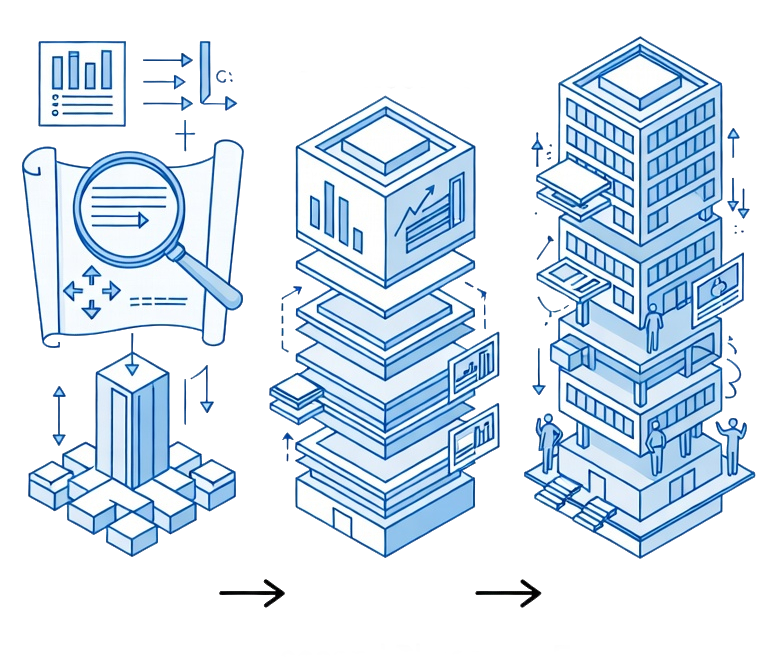
Phase 1: Structural Diagnostics
WHAT WE EVALUATE
We begin by evaluating whether the organization is structurally prepared to execute at the next stage of growth.
This is not a surface-level assessment.
It is a structured diagnostic of the conditions that determine execution performance.
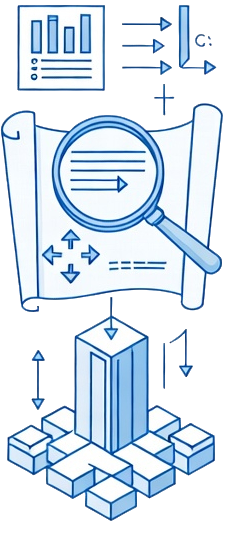
Outputs
- Structural Risk Index™ score
- Organizational risk heatmap
- Leadership and governance assessment
- Execution maturity analysis
- Prioritized risk areas
- 100-day execution roadmap
How We Do It
- Leadership and stakeholder interviews
- Document and system review
- Targeted organizational observation
- Diagnostic modeling using the Structural Risk Index™
Why It Matters
Without clarity, execution becomes reactive.
This phase ensures that effort is directed at the issues that actually limit performance.
Phase 2: Value Creation Architecture
WHAT WE DESIGN
Once structural issues are identified, we design the operating model required to support execution and scale.
This phase translates insight into structure.
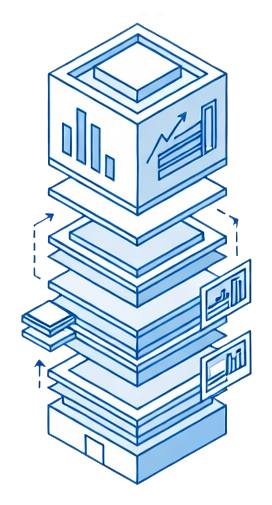
Outputs
- Organizational structure and role design
- Accountability and decision framework
- Core process and workflow architecture
- Technology and data alignment map
- KPI and reporting framework
- Defined operating model blueprint
How We Do It
We translate diagnostic insight into a defined operating model through:
- Working sessions with leadership to align on priorities and constraints
- Design of organizational structure, roles, and accountability
- Mapping of core processes and cross-functional workflows
- Definition of system requirements across technology and data
- Development of KPI frameworks and reporting cadence
This work is iterative and collaborative, ensuring the model reflects how the business actually operates, not how it is assumed to operate.
Why It Matters
Execution does not improve through effort alone.
Without a clearly defined structure:
- Roles overlap or remain unclear
- Decisions slow or stall
- Processes break across functions
- Systems operate in isolation
This phase ensures the organization is intentionally designed to support execution, so that effort translates into measurable performance.
Phase 3: Execution Leadership
WHAT WE DRIVE
We embed into the business to lead execution and ensure that the designed model translates into real performance.
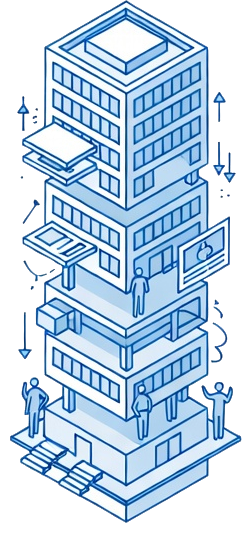
Outputs
- Implemented organizational and operational changes
- Established execution cadence and governance rhythm
- Active KPI tracking and performance visibility
- Leadership alignment across functions
- Measurable progress against defined priorities
How We Do It
We embed directly into the business to drive execution through:
- Leading key initiatives aligned to the execution roadmap
- Establishing operating cadence and performance rhythm
- Driving alignment across leadership and functional teams
- Implementing process, system, and reporting changes
- Monitoring progress and adjusting based on real-time performance
We do not observe execution, we lead it.
Why It Matters
Most initiatives fail in execution, not design.
Without ownership:
- Priorities shift
- Alignment breaks down
- Progress slows
- Results never materialize
This phase ensures that the designed model is implemented, adopted, and sustained—turning structure into real performance outcomes.
Not a Set of Services.
An Organizational Architecture System.
Traditional approaches separate diagnosis from execution, or skip structured diagnosis entirely.
Our model integrates both.
When This Work Becomes Critical
- Growth is creating strain on leadership and operations
- Execution feels inconsistent or unpredictable
- Decision-making is slowing down
- Teams are misaligned or working in silos
- Systems and processes are no longer scaling
Start with Clarity
The fastest way to improve execution is to understand where the real constraints exist.